
Phonics and Reading
We love reading!
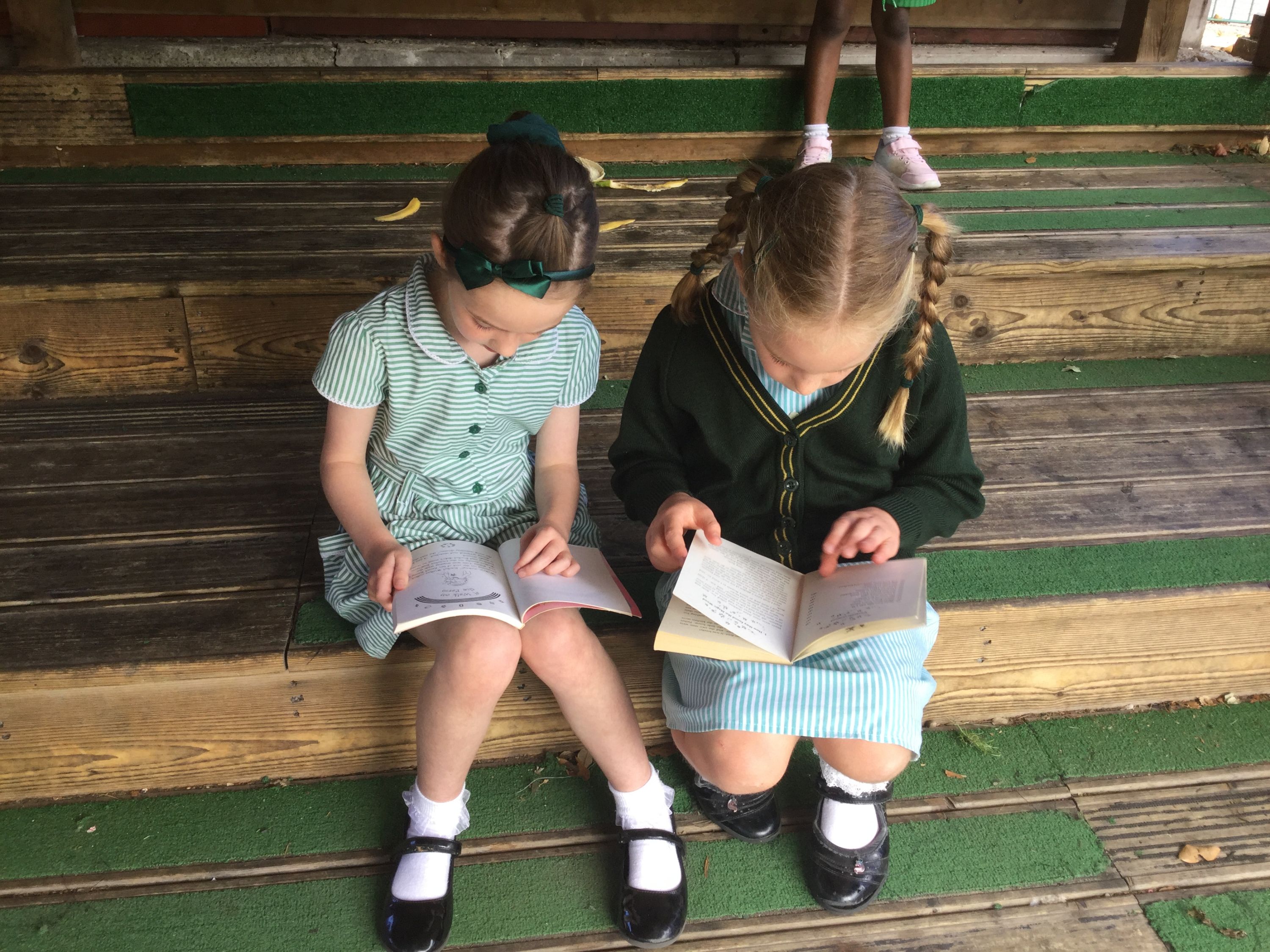
At St James’ School, we seek to develop a lifelong love of reading while equipping children with the skills and confidence to use reading as a gateway to learning and success in all areas of life. We aim to provide a wide and diverse range of books and experiences that will build and embed the foundations of reading. We seek to enable every child to ‘see themselves in a book’ and to be able to enjoy the creative, imaginative and inspiring experiences that can abound from immersing yourself in a good book, be it fiction or non- fiction.
Our School-wide Expectations are:
- A love of books and reading must be evident from the moment our doors open.
- An extensive range of high-quality books is available for all pupils irrespective of their age and academic ability.
- Pupils are encouraged to borrow books from well-stocked class and whole school libraries.
- Diversity and difference are embraced through the reading books available to pupils.
- Reading and a love of books is promoted through displays, rewards, celebrations, competitions and discussions.
- Teachers model expert reading to children and engage them with class books and stories.
Phonics and Early Reading at St James' (EYFS and KS1)
 We are pleased to let you know that we are now using Little Wandle Letters and Sounds Revised as our phonics programme across the school.
Little Wandle is a well-established, evidence-informed approach to teaching phonics that provides children with a clear, systematic pathway to becoming successful readers. The programme ensures that children learn the sounds and letters they need in a carefully planned sequence, allowing them to develop confidence, accuracy and fluency in reading.
What will phonics and reading lessons look like in school?
One of the key strengths of Little Wandle is the close link between phonics teaching and reading practice. Children are given fully decodable reading books that match the sounds and words they have already been taught in class. This allows them to apply their phonics knowledge successfully and experience themselves as readers from the very beginning.
Each morning, children will take part in a daily phonics lesson, where they learn and practise new sounds, words and reading skills.
Alongside this, children will participate in a daily reading session, during which they will read with an adult three times a week. During these sessions, children read the same book several times, with each read focusing on a different aspect of reading:
-
Decoding – using their phonics knowledge to accurately read words.
-
Prosody – developing expression, phrasing and appropriate intonation so that reading sounds natural and meaningful.
-
Comprehension – understanding what they have read, discussing vocabulary, characters, events and meaning within the text.
This structured approach allows children to become increasingly fluent and confident readers. When children become familiar with a text, they can focus less on working out individual words and more on reading smoothly and meaningfully. The purpose of these books is to help children become secure and automatic in using their phonics knowledge.
Reading at home
We encourage all children to read at home little and often, ideally five times each week. Regular practice, even for a few minutes at a time, has a significant impact on reading development. Please record any reading completed at home in your child’s reading record.
School reading books are carefully matched to children's current phonics knowledge through regular assessment and are intended to be read several times. Re-reading the same text helps children to move from simply decoding words to reading with increasing fluency, confidence and understanding.
When reading at home, you may notice that your child can read their phonics book confidently and with increasing fluency. This is exactly what we want to see! Success and repetition are key ingredients in learning to read.
Alongside practising their phonics book, we also encourage families to make time for reading for pleasure. This can be any book that your child chooses! They can have a go reading it or simply be read to by an adult. Pupils who enjoy reading, and who experience reading as meaningful and pleasurable, are far more likely to become fluent and resilient readers over time.
For more information about Little Wandle, please use the link below to access the 'For Parents' section of their website. This section is full of useful resources, blogs and videos that can give more information about how to support your child with their phonics learning.
Useful Phonics and Reading websites:
For parents | Letters and Sounds
Destination Reader (Key stage 2)
When children move into Key Stage 2, they take part in daily Destination Reader lessons as part of our reading curriculum.
Destination Reader is a highly effective, research-informed approach to teaching reading comprehension that enables children to become thoughtful, confident and independent readers. Through engaging, high-quality texts and carefully structured lessons, pupils develop the skills needed to understand, interpret and respond to what they read, while fostering a genuine enjoyment of reading.
Lessons typically last around 45 minutes and are divided into two sections:
- 15 minutes of whole-class teaching, where the teacher explicitly models key reading strategies and comprehension skills.
- 30 minutes of independent and collaborative reading, where children apply these strategies through partner discussion, questioning and text-based activities.
A key feature of Destination Reader is its emphasis on the learning behaviours that support successful reading. Children are encouraged to:
- Support and actively listen to others
- Discuss and explain their ideas clearly
- Take responsibility for their own learning and contribute positively to group learning
Alongside these behaviours, children are explicitly taught a range of essential reading skills:
- Predicting
- Inferring
- Asking questions
- Clarifying
- Making connections
- Summarising
- Evaluating texts
Through regular opportunities to discuss, justify and refine their thinking, pupils develop deeper comprehension, broaden their vocabulary and strengthen their ability to think critically about what they read.
Destination Reader ensures that all children engage with rich, challenging texts and are supported to become enthusiastic readers who can confidently access the wider curriculum and develop a lifelong love of reading.
